By / Gao Rong (Dean, Burgeon Academy)
The Burgeon Research Institute's recently published "AI-Driven Retail Nirvana: CIO's Omnichannel Retail and Intelligent Growth Strategic Blueprint" points out that retail enterprise AI transformation follows a development path from "Data Foundation" to "Process Efficiency," ultimately reaching "Model Innovation."
What truly differentiates enterprises is not the technology itself, but the deep transformation of Phase Three. We need to explore a more fundamental proposition: When AI becomes infrastructure, what kind of "genetic-level" transformation will the business processes and organizational structures that retail has followed for decades undergo?

![]()
I. The Root Problem: Driving an "AI Engine" with an "Industrial-Era Horse Cart"
In our process of participating in the digitalization of over 5,000 retail enterprises, we discovered a peculiar cycle: Many enterprises spent heavily on predictive models and intelligent algorithms, yet still deeply felt they "couldn't make it work."
![]()
The problem is not technology — it's the organization. Today's retail enterprises are mostly still trapped in the legacy of the industrial age.
Systems are individually efficient yet mutually isolated, forming "efficiency islands." Data flows, but people are held back by processes. A representative set of data from the report: A single moderate supply chain disruption can cause 46% of retail enterprises' operational costs to rise by over 10%; at the same time, 63% of critical business personnel are in remote or semi-remote states, and traditional management approaches that rely on hierarchy and directives are failing.
![]()
When the organization itself becomes the most fragile link, simply stacking tools can no longer solve the problem. What AI demands is not "optimization" — it's "rewriting."

II. Process Reshaping: From "Rigid Rules" to "AI Intuition-Driven"
![]()
Take the ""allocation and replenishment"" business as an example. The traditional process is essentially ""rule-driven"": relying on rigid logic such as sell-one-replenish-one and safety stock. Business personnel spent 80% of their energy buried in "dirty work" — aggregating data and calculating spreadsheets.
The future will completely overturn this. AI directly digests full-scope sales data, weather trends, social media buzz, and real-time inventory — and like possessing commercial intuition, directly gives instructions: "For Style A merchandise, based on its hot-selling trend in East China and the size stockout situation at Store B, it is recommended to immediately replenish 15 units from Warehouse C." The decision chain transforms from "humans calculating" to "AI proposes, humans decide."
![]()
This is not mere speculation — we are already implementing it. For a leading women's fashion brand served by Burgeon, restructuring replenishment logic with AI models freed regional merchandise staff from heavy spreadsheet work. Single allocation and replenishment decision time compressed from an average of 8 hours to under 2 hours. Behind this efficiency leap is genetic-level transformation of business processes.

III. Organizational Innovation: From "Pyramid Control" to "Frontline Empowerment Platform"
When AI takes over data analysis and initial decision-making, retail organizational structures must shift from "reporting upward" to "empowering downward."
Consider store sales associates. Previously, they were cashiers and pushy salespeople. Now, with Burgeon's "AI Sales Script Assistant," they can analyze customer preferences, suggest relevant pairings, and prompt membership benefits in real time. Associates no longer need to memorize product manuals by rote — they transform into professional fashion consultants focused on emotional connection and deep service. The report shows this empowerment directly increases attachment rates for high-value merchandise.
![]()
The value of "merchandise experts" and "operations managers" in the back office will undergo a leap. They no longer need to burn the midnight oil producing precise sales forecast spreadsheets — AI does it faster and better. Their more important value lies in: 1) Defining business goals (""What emotional theme should we feature for Qixi Festival?""); 2) Evaluating AI recommendations ("Does this allocation plan balance brand image with inventory health?"); 3) Handling complex exceptions and human communications that AI cannot process. They transform from "data operators" to "AI command officers and strategy officers."

IV. Ultimate Reconstruction: Building a New Trust System Based on "Human-Machine Collaboration"
![]()
All reconstruction ultimately points to "people."
The report reveals that 43% of consumers only trust AI when recommendations are transparent. The essence of AI transformation is not to replace human warmth, but to free people from the position of "parts" by efficiently handling redundant processes, allowing them to create irreplaceable, warm experiences.
![]()
Burgeon's Role Is Changing
In the era of omnichannel connectivity, Burgeon was the builder of the digital skeleton (POS, OMS, ERP). At the inflection point of AI-driven transformation, Burgeon's role has already evolved: We no longer merely provide systems, but serve as a ""business model restructuring partner,"" helping enterprises redefine the boundaries of human-machine collaboration.
![]()
Retail's Nirvana is about making technology invisible, letting human creativity emerge.
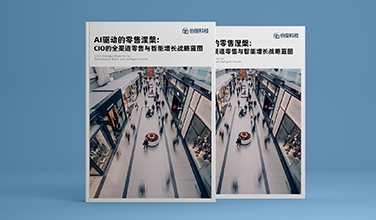
This article is based on core insights from the Burgeon Research Institute's "AI-Driven Retail Nirvana: CIO's Omnichannel Retail and Intelligent Growth Strategic Blueprint." The report details the three-phase model of retail AI transformation and includes more industry data, trend analysis, and complete customer case studies.





 2026/06/21 周日 22:17