By / Jiang Huaqing (CIO, Yongxing Dongrun)
Yongxing Dongrun, a company dedicated to designing and selling children's apparel for ages 0-14, counts ROOKIE as its most prominent retail brand. Yongxing Dongrun's explorations and achievements in information system construction in recent years—especially its core practices in embracing omnichannel and intelligence—have delivered tremendous value for the company's sustainable development.
Maturing Systems Lay the Foundation for Omnichannel
Thanks to Burgeon's system's strong openness and customizability, we undertook a series of deep developments and innovations, including self-developed Smart Allocation & Replenishment System, Smart Pricing Control System, and Smart Quick Response System. These solved four key business pain points:
Ending Order Loss Due to ""Out of Color or Size."" In the past, customers abandoning orders due to missing colors or sizes was a frequent occurrence. Under the omnichannel model, the system enabled full-scope inventory sharing and visibility. When Store A runs out of stock, the sales associate can query stores or warehouses with available inventory in real time via the system and process cross-store/warehouse orders, directly recovering valuable sales opportunities. This is particularly critical for the children's wear industry, where SKUs are abundant but individual style inventory depth is limited.
![]()
Empowering Frontlines to Boost Product Exposure. The sheer volume of children's wear SKUs combined with limited depth per style is a universal challenge. Effectively displaying and maximizing exposure for every product in store has been a major hurdle. The system provides robust data support and merchandising tools, and combined with smart allocation suggestions, helps stores more precisely curate product assortments, optimize display, and significantly improve each product's visibility and conversion potential.

Optimizing High-Frequency Allocation Processes. In traditional retail operations, inter-store merchandise transfers are as routine as clockwork, with an average frequency of once every week or two, consuming enormous amounts of labor and time. The system dramatically simplified and automated this tedious process, and the smart allocation system pushed the rules upstream, notably improving allocation efficiency and accuracy.
![]()
Maximizing Inventory Resource Utilization. The system broke down inventory barriers across channels, regions, and stores, activating ""sleeping"" inventory resources and enabling ""one inventory pool"" management. Orders can now be fulfilled based on the globally optimal principle, significantly boosting inventory turnover rate and overall operational efficiency.
During implementation, we closely tracked two core operational KPIs. Order Split Rate: Thanks to relatively complete warehouse inventory and intelligent scheduling, our order split rate has been controlled at an exceptionally low level for years. Order Rejection Rate: We are pleased to report that our order rejection rate has stabilized at approximately 3 per 10,000 orders.

![]()
From Allocation, Pricing Control to Quick Response — Achieving Intelligence Advancement
In traditional models, each subsidiary or region often needed multiple professional buyers handling merchandise allocation. This is not only costly, but the quality of allocation decisions depends heavily on individual experience, resulting in uneven performance levels. More critically, for multi-brand stores like ROOKIE, the complexity of merchandise allocation is extremely high, requiring simultaneous consideration of multiple dimensions such as each brand's sales share, footwear-apparel-accessories category mix, age group distribution, and gender ratio. Manual decision-making carries enormous difficulty and risk.
Therefore, we launched our Smart Allocation System in early 2023. Based on our preset multi-dimensional rule engine covering the full year's 52-week business rhythm—brand weight, category mix, sales forecasting, inventory levels, historical performance, activity planning, and more—the system automatically generates allocation recommendations, substantially reducing human intervention. For specific, unplanned events (such as store anniversaries), the system supports separate application and approval. Since launch, the system has not only significantly reduced labor costs but also improved the scientific rigor, timeliness, and accuracy of allocation decisions.
![]()
Complementing merchandise allocation, pricing management is equally critical. Within the smart allocation system, we integrated a Smart Pricing Control module. Its core value lies in providing real-time price-change impact analysis. For example, when a business user submits a price reduction request, the system can automatically calculate and ""broadcast"" key metrics such as the potential loss from this price adjustment and its impact on overall discount rate, empowering management to make risk-controlled, precise decisions.
Achieving efficient ""Quick Response"" capability is the core competitive strength of modern apparel enterprises, especially for children's wear with its fast-changing fashion and short sales cycles. We integrated and connected the entire chain from merchandise selection analysis and approval workflows to production task issuance and post-launch performance tracking, forming an efficient smart quick response workflow. In the second half of 2023, we selected the e-commerce channel as our smart quick response pilot platform, and the results were encouraging. The system performed exceptionally in boosting merchandise turnover efficiency, optimizing inventory structure, and ensuring availability of top sellers. More directly, the channel's gross margin was effectively optimized, with e-commerce sales reaching 11.7% of the total during that period. This result fully demonstrates the feasibility and enormous potential of the smart quick response mechanism.

![]()
From Processes to Data to Intelligent Operations
As CIO, I have always been contemplating the core value of the IT department within an enterprise. While governance models vary across companies, IT's value has shifted from foundational support to strategic driver. I divide this evolution into three eras:
IT Era: Building the Foundation, Unblocking the Vessels. This is the starting point of informatization, centered on leveraging professional expertise and integrating high-quality partner resources to rapidly build the foundational infrastructure platform for enterprise informatization. Value at this stage is primarily reflected in process standardization, information transparency, and breaking data silos. It requires investment and must overcome resistance to change.
DT Era: Data Empowerment, Insight-Driven. Once the foundational platform matures, value shifts to how to derive value from accumulated data. At this point, IT needs to face the business, providing robust data support and visualization capabilities. The key is designing a scientific metric system and embedding it into operational processes.
![]()
OT Era: Data Asset Monetization and Management Intelligence. This is a more forward-looking stage, with the core being deep data application driving intelligent decision-making and business growth. We are working toward this direction—for example, using precise in-store foot traffic data to guide new store location selection, optimizing layout of existing stores, and designing store traffic flows to improve the ""venue"" element of the ""person-venue-merchandise"" framework; based on real-time retail display feedback data for merchandise curation and more effective promotion mix design to boost merchandise conversion rates.
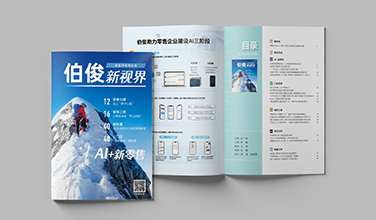
This article is featured in Burgeon's New Vision, edited-in-chief by Sun Yihui, Chairman of Burgeon Technology, and produced by the Burgeon Research Institute.
![]()





 2026/06/21 周日 22:16