Omnichannel AI Upgrade: From "Connecting Goods" to "Governing Data" — Reclaiming Retail Data Sovereignty
By / Gao Rong (Dean, Burgeon Academy)
Over the past decade, when we talked about omnichannel, we were really talking about "how to move goods" — inventory sharing, store fulfillment, all centered on getting merchandise to market faster. That matters, but today, the rules of the game have changed.
AI is here. What it needs is not "where is the product," but "who is the person" and "why do they buy." This means the omnichannel battlefield has already evolved from physical inventory integration to governing full-scope data flows.
I. Old Maps Can't Reach New Worlds
Over the past decade, "omnichannel" has undoubtedly been the core proposition of the retail industry — essentially an "item-centric" efficiency improvement initiative.
In the past, brands struggled with inventory silos. Online orders couldn't be fulfilled due to stockouts, while offline stores were sitting on excess inventory. So we built middle platforms, connected systems, and achieved "one inventory pool." Skechers, for example, consolidated over a thousand virtual logical warehouses to fewer than 100 through its omnichannel project, with immediate efficiency gains.
But that was only the first half. We connected the flow of "goods," yet left the far more valuable data on "people" and "venues" stranded across system silos. What consumers browsed online, what they tried in stores, why they ultimately abandoned the purchase... these critical behavioral insights that determine business outcomes remain dormant.
Without high-quality, high-dimensional data, AI is like a skilled cook with no ingredients. Feed it "garbage data" and it can only produce "garbage strategy."
II. Paradigm Revolution: AI Era — Omnichannel = Data Lifeline
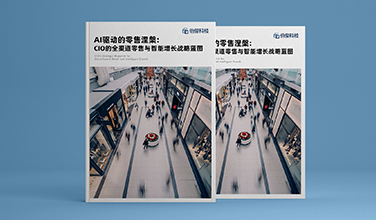
As generative AI and large language model technologies sweep across the industry, the definition of omnichannel has been completely rewritten. Today, the core of omnichannel has upgraded from "physical flow of goods" to "real-time capture, governance, and application of full-scope data flows." The Burgeon Research Institute pointed out incisively in the report "AI-Driven Retail Nirvana": The most important value of the omnichannel middle platform lies in its ability to "empower AI."
1. Data Dimension Shift: From Transaction Outcomes to Full Behavioral Chains
What AI large models need as "fuel" is no longer simple sales records, but continuous, multi-dimensional user behavioral trajectories. The journey of a consumer who was influenced on Xiaohongshu, browsed repeatedly on an app, touched the fabric in a store, and finally made a purchase — this cross-channel, cross-scenario behavioral chain is the logical foundation for AI to understand true preferences and deliver "hyper-personalized" recommendations and predictions. Without a closed-loop of full-chain data, AI cannot understand "why they bought," let alone predict "what they will buy next." The greatest value of an omnichannel platform is precisely this ability to "feed AI."
2. Data Quality Matters: It Determines AI's "IQ"
The iron law of AI — "Garbage In, Garbage Out" — still applies. If data is dirty, duplicated, or fragmented (for example, the same user being treated as different people across different channels), then the strategies AI produces will be miles off the mark. Therefore, current omnichannel construction is essentially a large-scale data governance initiative, with the goal of ensuring data accuracy, consistency, completeness, timeliness, validity, and uniqueness — providing high-quality "training material" for AI.
III. Reclaiming Data Sovereignty: Stop Being a ""Data Tenant Farmer"" for Platforms
A brutal commercial reality reveals the underlying logic: Whoever controls data sovereignty controls the initiative in profit distribution and future growth. The report cites a staggering figure: In 2024, Alibaba's net profit alone was 2.5 times the combined net profit of all above-scale enterprises in China's apparel industry. Behind this is the value monopoly brought by data sovereignty.
1. Breaking Free from the "Black Box" and "Rented Computing Power" Dilemma
In the past, brands relied on platform traffic but were also trapped by the platform's "data wall." You knew who you sold to, but you had no insight into the algorithmic logic behind the traffic or the full picture of users. In the AI era, if a brand has no self-owned, high-quality full-scope data pool, it can only "rent" the platform's generic AI capabilities, and will never be able to train a "brand-specific brain" that deeply understands its own product characteristics, customer preferences, and supply chain rhythms.
2. The Connotation of Data Sovereignty: From Control to Value Creation
Reclaiming data sovereignty means brands must be able to independently acquire, govern, and apply raw omnichannel data. This requires:
Deepening private domain: Transforming mini-programs, Work WeChat, and similar platforms from sales channels into powerful tools for deep interaction and data accumulation.
Digital stores: Using IoT, smart sales associate apps, and other tools to convert previously invisible offline behaviors — "try-on rates," "dwell times" — into analyzable data.
Unified data middle platform: Forcing data scattered across e-commerce platforms, distributors, and store systems back into a unified, brand-owned data pool, forming a single customer view (One ID).
IV. Action Guide:Building an AI-Ready Data Foundation
For retail enterprises aspiring to AI transformation, the path is already clear. The Burgeon Research Institute's "AI-Driven Retail Nirvana" report proposes a "Three-Stage Roadmap," with "data and foundation" as the indispensable first phase to solidify (months 1-12).
1.Establish a unified "One ID" system
This is the cornerstone of data governance. No matter which channel a user appears on, they must be mapped to a single identity in the backend through technical means.
2. Invest in data governance and the middle platform
Treat data governance as a prerequisite investment, not an afterthought. Use tools for legacy system modernization to reduce data integration costs.
3. Innovate within a secure and compliant framework
While collecting and applying data, establish transparent data usage mechanisms and a robust governance framework, turning "compliance" into a competitive advantage that earns consumer "trust."
V. Conclusion: Omnichannel Nirvana Begins with Data Awakening
"AI-Driven Retail Nirvana" is not an empty phrase. Nirvana means bidding farewell to old forms and gaining new life.
Over the past decade, when we talked about omnichannel, the core was "connecting goods," solving the problem of inventory efficiency. In the next decade, when we talk about omnichannel, the core must be "governing and integrating data," solving the problem of intelligent decision-making. AI is not a plug-and-play add-on tool — it is an intelligent life that must grow in the soil of high-quality data.
This awakening, beginning with data, is the true starting point of retail Nirvana. For the complete strategic blueprint of AI transformation, more detailed phase pathways and risk-avoidance strategies, click "Read Original Article" to download the Burgeon Research Institute's complete report "AI-Driven Retail Nirvana: CIO's Omnichannel Retail and Intelligent Growth Strategic Blueprint" for deeper insights and action guides.










 2026/06/21 周日 22:15